When it comes to patchwork, there's one thing that most quilters agree on - your pieces are best cut with a rotary cutter. There are so many benefits to rotary cutting, particularly when it comes to patchwork fabric - for one, it's a LOT more accurate than using scissors, which makes a big difference when sewing up your final blocks. It's also a great way to trim your blocks evenly once stitched up. If you're new to it, there are a few bits of kit that you'll need...
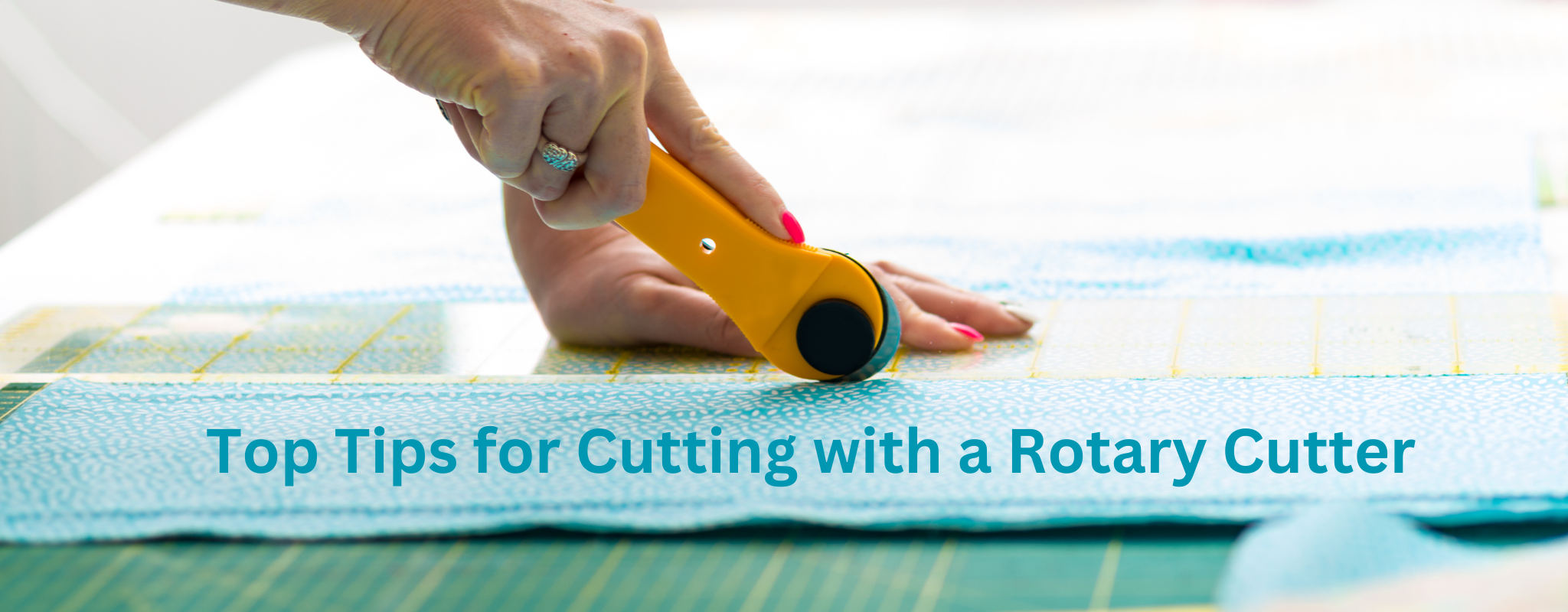
First up is a rotary cutter (obviously)! There are many different brands, but they do tend to be pretty similar; the main difference is usually only in the shape of the handle (a personal preference) and the quality of the blade. Olfa cutters are a trusted brand - you might recognise the yellow handle. You can also get cutters with special features, like easy-changing blades or trigger handles to help with specific issues like wrist pain.


A must-have to use with your cutter, is a cutting mat - these protect your work surface from damage when using the rotary blade, and also are handy for measuring out the size to cut as they have grid lines on them. The rotary blades are VERY sharp and can easily cut through a table or desk, which is why you need a safety mat!

Lastly, you'll need an acrylic ruler of some kind, to help you cut straight. These come in all shapes and sizes; you can either get a long rectangular one that can be used to cut a range of squares and rectangles to size, or a variety of specific shapes for more particular blocks. As a beginner, I'd recommend at least having a large rectangular ruler in your arsenal that can be used for a variety of projects, and get the rest as needed!


If you need all of the above to get you going, you can get starter sets that contain a cutting mat, rotary cutter and basic acrylic ruler all in one package.

Top Tips for Safe Cutting
When it comes down to the cutting, the technique is to line up your ruler where you want to cut your fabric, place the rotary blade against the edge of the ruler and trace up the side of the ruler while pushing down with medium pressure. Don't use too much pressure or you may find you slip easily, damage your mat or give yourself wrist pain. It can take a few tries to get the pressure right, so persevere! Once you've mastered this, follow these tips for safe cutting...
- Always cut away from you! If the blade slips when cutting, you could cut yourself if you are cutting towards yourself.
- Invest in Ruler Grip spray or special grip dots to put on your rulers if you find they slip as you cut
- If you find areas of your work aren't cutting smoothly, you may need to either replace the blade or use a different part of your mat
- Try not to overuse the same areas of your mat, or they will no longer self-heal easily and you will wear a groove into them that means they won't cut well
- Replace your rotary blade periodically to ensure it stays sharp
- Be very careful when replacing your rotary blade, as it is VERY sharp and can easily cut deeply into your fingers!
- Always leave the guard up on the blade when you are not using it - yes, even when you are just putting it down for five seconds! If you knock it off and it falls on your foot, you'd probably like to keep all of your toes...